Is the key to modern manufacturing ‘smart’ rather than ‘dark’ factories?
The next decade in manufacturing will likely see accelerated progress towards fully automated factories. A number of Australian manufacturers are already looking into what becoming a “dark factory” could mean for their business moving forward. So, what is a “dark factory”? What does going dark really mean on the factory floor and is it a viable reality in the near future for Australian manufacturing?
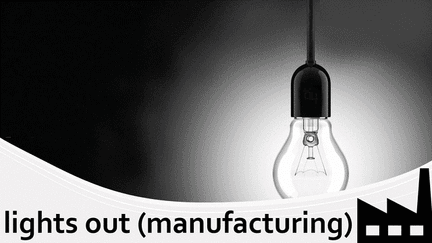
Generally, a "dark factory", “dark manufacturing” or “lights out manufacturing” refers to a fully automated industrial production site where the creation of products is entirely done without any direct human intervention. Automatically controlled machines carry out the whole production process from the entry of raw materials into the factory to the delivery of finished products. Over the past decade we have seen significant growth in “Dark Warehouses”. As automation improves and becomes cheaper this production trend into will only speed up.
Machines Create Jobs and Replace Tasks
It’s not jobs which are replaced by automation – it is tasks within jobs. The implication is that while most jobs will change, they will not disappear. A study published by the McKinsey Global Institute came to the same conclusion: “More occupations will change than will be automated away.” At the end of the day, someone needs to program and supervise the machines, and they will require adequate care for the software they use, electrical and mechanical components. Humans will be required to innovate and manage the workflows of the devices.
Dark factories bring complete automation to the manufacturing processes. However, as efficient as automation on a large scale is, it’s expensive and can be inflexible. Manual assembly requires an enormous amount of individual skill. Modern manufacturing lines can require decision making and sensitivity that’s hard to replicate with algorithms and robots. Dark manufacturing not only comes with benefits for organisations, but it also has its fair share of drawbacks.